Introducing the new Talis Tagging System
Academic libraries are under growing pressure to support inclusive curricula, promote Open Access, and make smarter, data-informed acquisition decisions – all while working within tighter budgets.
The new Talis Tagging System for Talis Aspire and Talis CourseFlow is designed to help libraries and institutions meet these challenges head-on. By enabling consistent, meaningful tagging for resources within lists, the tagging system surfaces priority materials while unlocking valuable insights across reading lists.
Why the Talis Tagging System?
Many universities are actively working to diversify and decolonise their curricula. This includes highlighting Indigenous Knowledge, Indigenous authorship, and other underrepresented perspectives within reading lists.
At the same time, funding pressures across higher education have increased the importance of identifying and promoting Open Access and freely available resources to reduce costs for students.
The Talis Tagging System addresses this gap by giving institutions a structured, flexible way to classify, surface, and analyse resources, directly within Talis Aspire and Talis CourseFlow.
What we’re developing
The Talis Tagging System enables institutions to apply list-specific tags to resources within reading lists, making it easier to:
- Highlight key categories such as Indigenous Knowledge, Indigenous authorship, Open Access, and OER
- Surface institutionally preferred or priority materials
- Gain clearer insight into how different types of resources are being used across courses
Tagging data will also feed into institutional analytics, supporting more informed, needs-driven collection development and acquisition decisions.
How the tagging system works
Built for institutional flexibility
Tags can be created, managed, and governed centrally by system administrators, ensuring consistency across reading lists while aligning with institutional priorities and terminology.
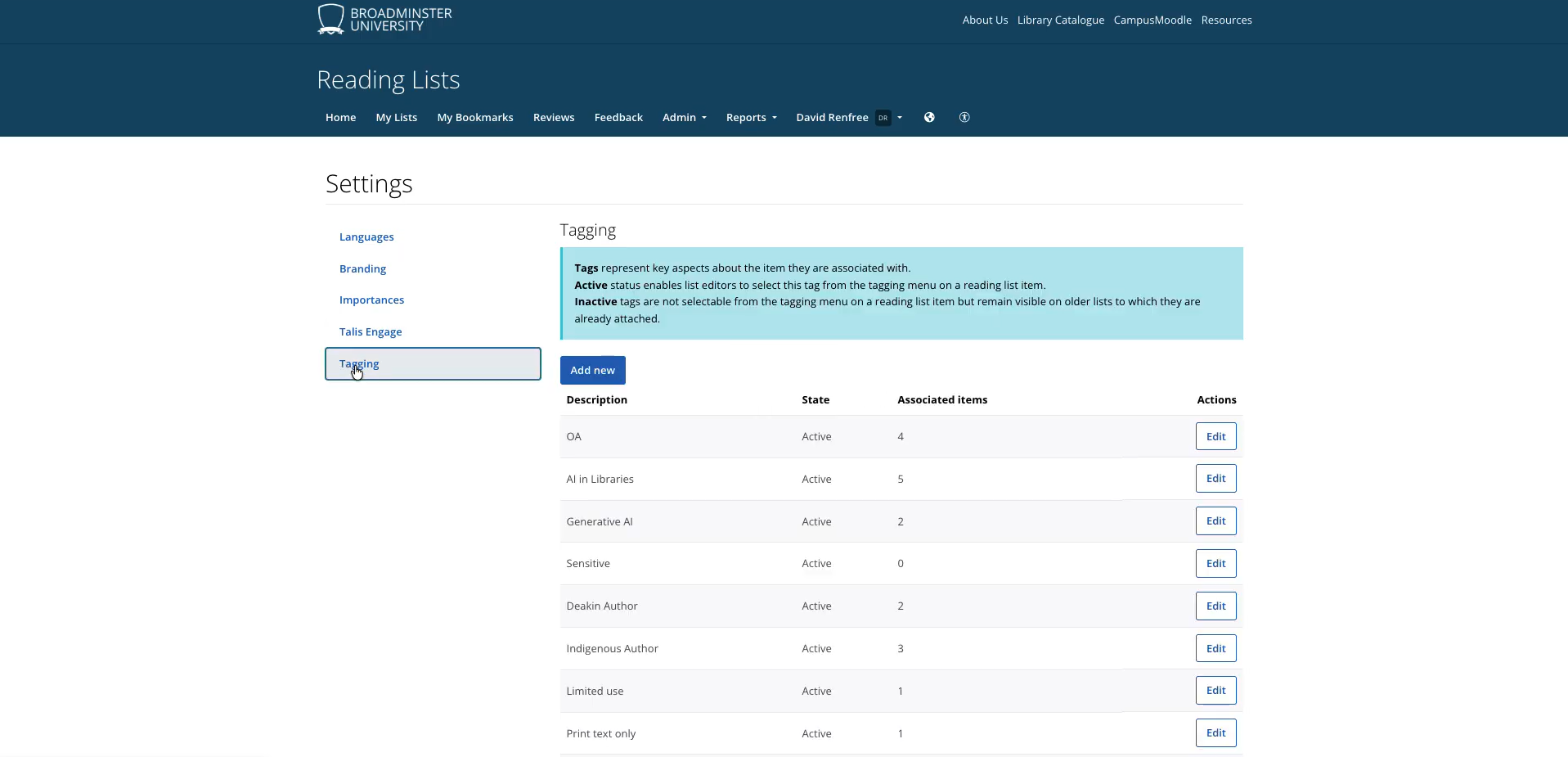
Streamlined Resource Access & Download
Tags let you label resources within a reading list, making key items stand out and easier for users to identify. By applying tags, you can highlight priority resources and give faculty and students a clearer view of what’s most important.
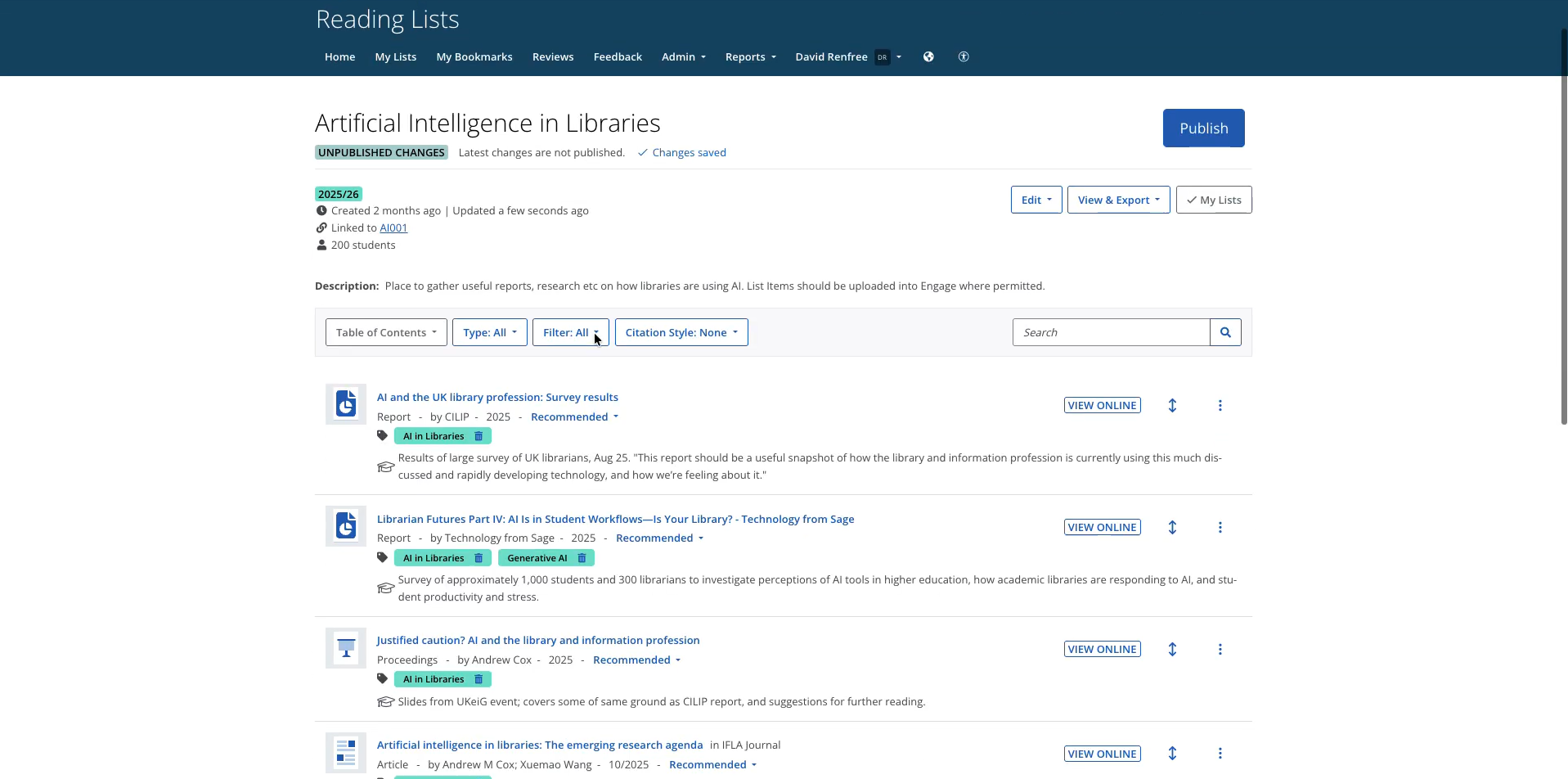
See the Talis Tagging System in action
Discover how the Talis Tagging System helps surface priority resources, support inclusive curricula, and strengthen insight across reading lists, and request a demo to see it in action.